
Complex & continuing care
Every diagnosis, support need and plan change, kept in one record
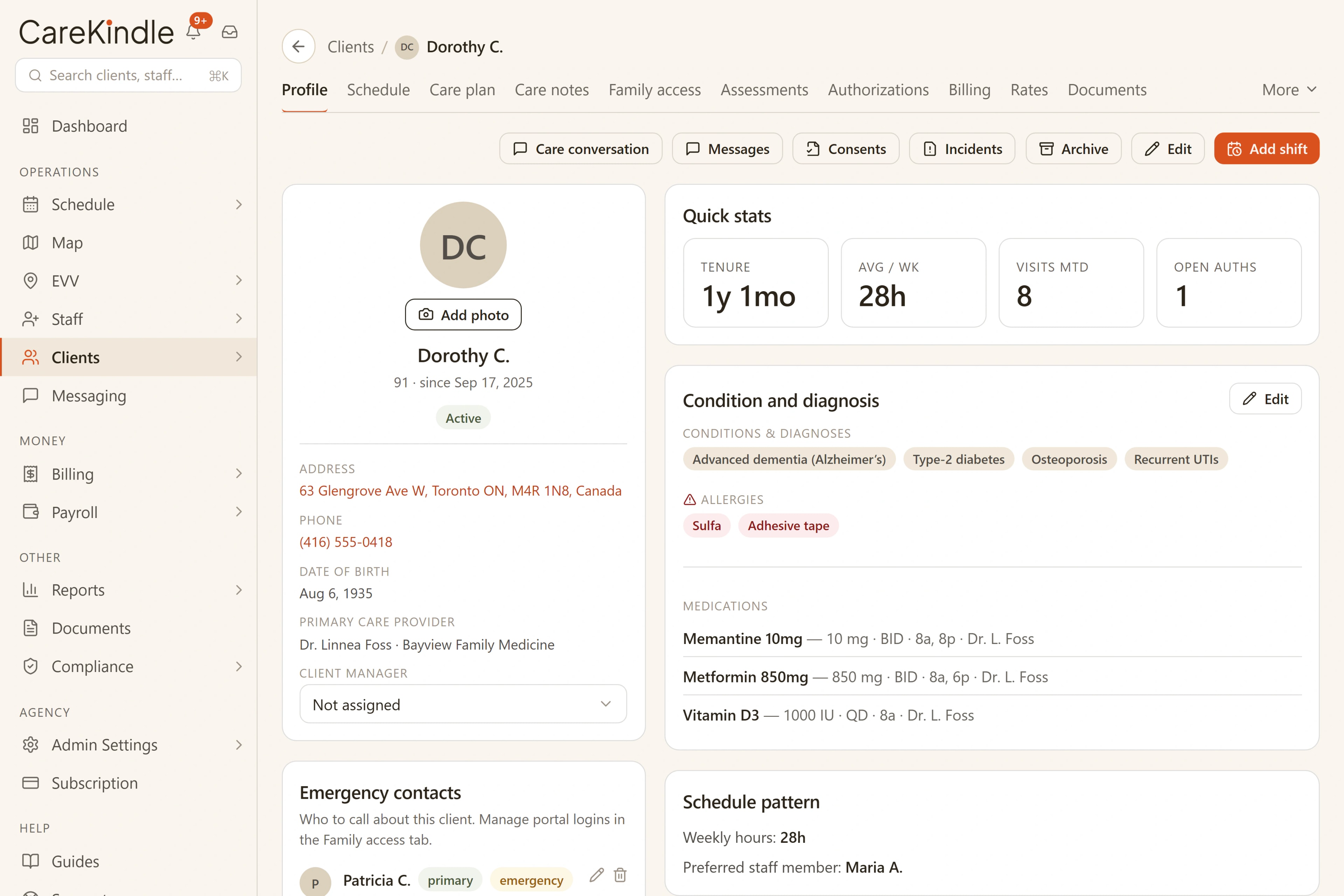
Children and adults living with disability carry long, layered histories. CareKindle keeps every diagnosis, support need, and care-plan change in one record, so the person at the door already knows who they are caring for.
Care plans that hold their history
Every change to the plan, kept and accountable
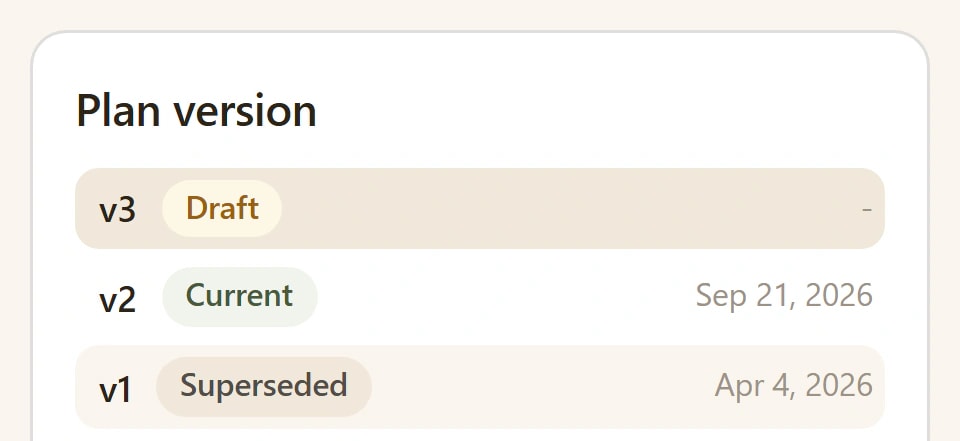
A complex care plan changes as a child grows or a condition shifts, and you need to know exactly what changed and when. CareKindle versions each plan so the current goals are clear while the full history stays intact, aligned with the health-privacy laws that apply to your agency (PHIPA and PIPEDA in Canada).
- See the active version at a glance, with every prior revision preserved
- Capture goals, routines, and support needs in structured fields
- Know who published each change and when it took effect
Intake that matches the complexity
A structured intake for layered support needs
Onboarding a client with complex needs means gathering far more than a name and an address. The multi-step intake walks your team through each section, so nothing essential is missed before the first visit.
- Move through clear, guided steps from referral to active care
- Record diagnoses, equipment, allergies, and consents in their own sections
- Pick up an unfinished intake exactly where you left off
A connected circle of care
Everyone around the child, in one place
Care for younger and disabled clients almost always spans parents, guardians, and a wider circle of support. CareKindle keeps those people working from the same record instead of scattered texts and email.
Secure messaging
Message families and the care circle in one threaded place, tied to the right client, not scattered across texts and email.
Family portal
Give parents and guardians their own login: a clear view of recent visits and updates, and nothing else.
Versioned care plans
Keep goals, routines, and support needs structured and current, so everyone on the team works from the same plan.
A visit that can be about the child, not the paperwork
When the record is complete and the plan is current, the staff member who walks in is free to be present. The system carries the detail so the visit can carry the child.

The detail in the chart serves the child in the room.
Layered histories and structured intake exist for one reason: so the person at the door already knows this child, and the visit can be about the child, not the chart.
Other care settings
The same platform, for other kinds of care
Home Care
Scheduling, visit verification, and billing for visits in the home.
Assisted Living
Coordinate care and staffing across a residence.
EVV
GPS check-in at the door with a live board and exception queue.
Give every complex case one record that holds its full history
14-day trial · full access · no credit card.